
Washed in Shadow
A pseudo-noir interactive theater experience.
2023-24
Game Overview
Washed in Shadow: An Out of Service Story is a pseudo-noir style interactive film project designed to be viewed by a large theatre audience. Guided by a host on-stage, the audience watches a scene unfold before voting on what decisions the main character makes at the end of the scene. With 16 scenes and 5 unique endings, no two playthroughs are the same!
Washed in Shadow was developed by a team of Bradley students to be publicly presented at FUSE, an annual showcase of student projects, in 2024. It garnered an estimated 1,000+ viewers over two days of the event. It is a prequel to a game shown the year prior, Out of Service, which I worked on as a writer!
Team Size:
11
Platform:
Windows, streamed in theater
Development Platform:
Unity
Project Duration:
3 months
Play the Game on YouTube!
Producer and Story Director
As the sole producer on the team, my primary responsibilities were as the Lead Producer and the Story Director These roles existed to ensure the film’s narrative stayed consistent and true to the game’s core pillars throughout the entire development process, while also managing timelines for the script writers.
Management
Development was broken down into two major phases: script writing and filming. Using tools such as Google Sheets and Trello, I created roadmaps and task boards to communicate important dates and deadlines to the writing team, which ensured ample time for the film team to work. With only 3 months from start to finish, clear deadlines were critical to the success of the project.
Leadership
During our weekly meetings, I led group discussions and reinforced communication between writers. I also directed script revision sessions, pointing out important flaws and inconsistencies throughout the game. As well, I hosted team-building activities to keep morale high, despite our tight schedule.
Narrative Direction
I helped the writing team define key plot points and story beats to help guide the game’s overall direction. To keep track of story pacing, I used Twine to map out the flow of the game. As well, I championed character personalities, voices, and scene settings to best communicate the tone of the game. All of these responsibilities worked to keep the presentation of the story consistent, fun, and within scope, while simultaneously making sure all of the individual writers’ work was well represented in the final product.
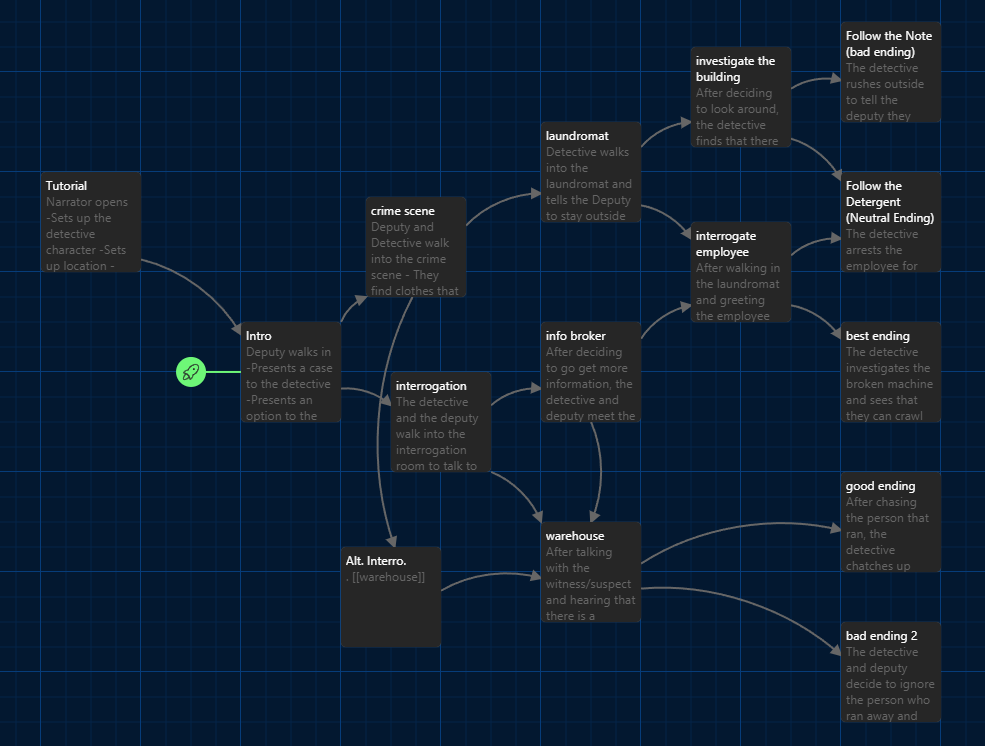
This is the Twine flowchart that we used to plan the whole show!
Stage Director
After the scripts were locked down and we focused more on filming, I took on the role of Stage Manager. In this position, I made creative decisions about how and where each scene would be filmed, I managed the cast and crew on-set, and I ensured the actors stayed true to their characters.
Blocking & Movement
I positioned actors and crew members during filming to help emphasize the tone of the game. As well, I demonstrated proper character movements in order to help the actors better understand the flow of each scene. Specific details of how the scripts should be presented can easily fall through the cracks, so I worked to ensure everything the actors did aligned with the scripts’ visions.
Direction
With the game’s comedic tone, proper line delivery was important, so I helped guide the actors towards our goals on-set. I gave specific and actionable feedback to our actors during the filming process to enhance the emotional impact of their lines. This feedback and communication significantly cut back on the amount of time needed to film each scene, and helped prevent the need for reshoots later down the line.
Set Management
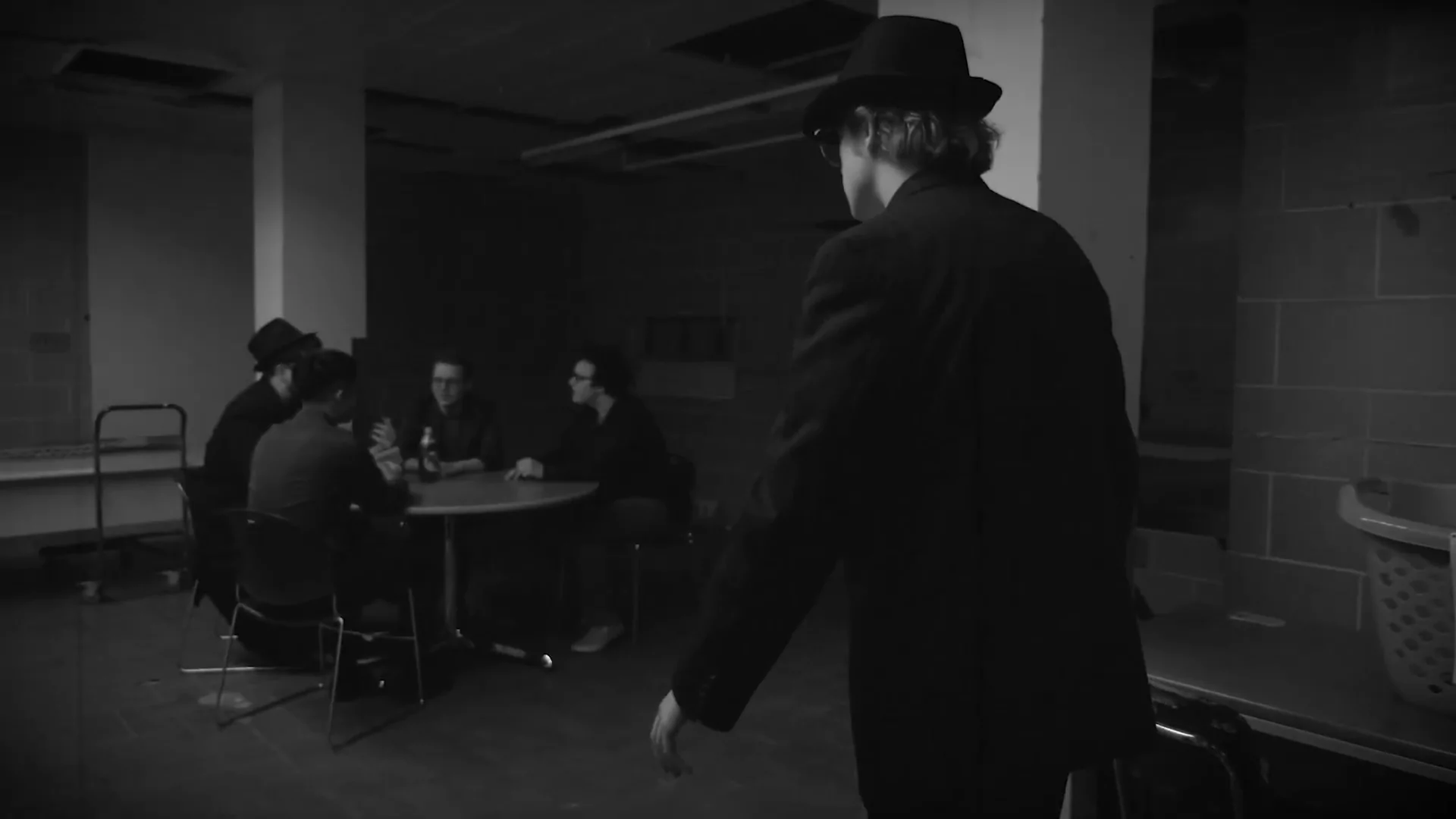
I organized our film sets by scouting filming locations and organizing props and lighting. The challenge of filming in black and white was new to us all, so extra emphasis was placed on lighting the scene properly. I also helped our film crew position their cameras to best align with the vision of the scene. Properly organizing our crew helped smooth out and shorten the time spent setting up the sets, and the time between takes was spent more efficiently.
Key Takeaways
Adaptability
Leading a team while working with such an unfamiliar medium was an amazing opportunity to refine the skills that I already had, while also learning how to overcome strange and situational challenges.
The biggest challenge we faced was the filming phase as a whole. With a very small film crew and with access to limited resources, the importance of efficient time management cannot be understated. It was refreshing to apply my management skills in new contexts, like determining filming schedules that aligned with many different moving parts. I had to plan around the availability of our outsourced actors, chosen set locations, and even considerations as mundane as the position of the sun! With such uncontrollable factors, unexpected changes were common. I had to frequently check our capabilities against our planned timelines, and I made critical adjustments to our scope, as necessary. Adaptability during development was what allowed the project to be as successful as it was.
Creative Management
Washed in Shadow was a difficult, yet incredible exercise in creative management. This was my first time directing a story-based project, so I had a lot of learning to do in order to best support my team. I learned how to give better feedback to the team. I learned how to focus on the overarching creative vision of the project, and how to make creative decisions that best support said vision. And, most importantly, I learned how to better ensure that everybody was on the same page in terms of the creative vision. In a game with so many interconnected scenes and branching paths, it was critical that I emphasized communication amongst our writers.
Contact Me
Let’s talk about how I can help your team create their best!